
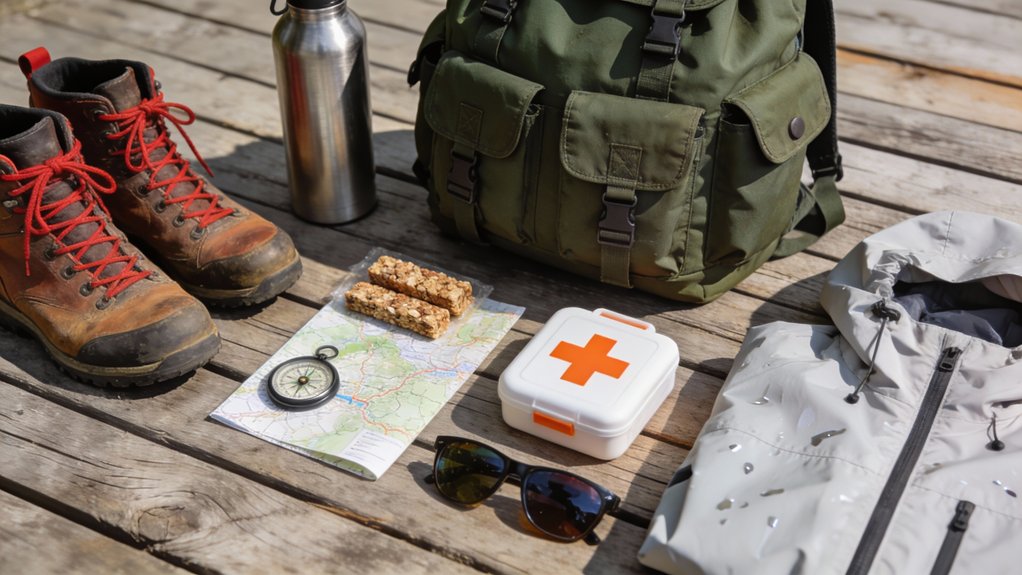
Nearly 40% of first-time hikers turn back early because they packed the wrong gear or forgot something essential. You don’t need to spend hundreds of dollars or fill your pack with every piece of equipment at the outdoor store, but you do need the right basics.
The difference between a miserable afternoon and a comfortable trail experience comes down to about ten items, and knowing exactly why each one matters before you leave your car.
Choose a Daypack That Fits Your Day Hike Gear
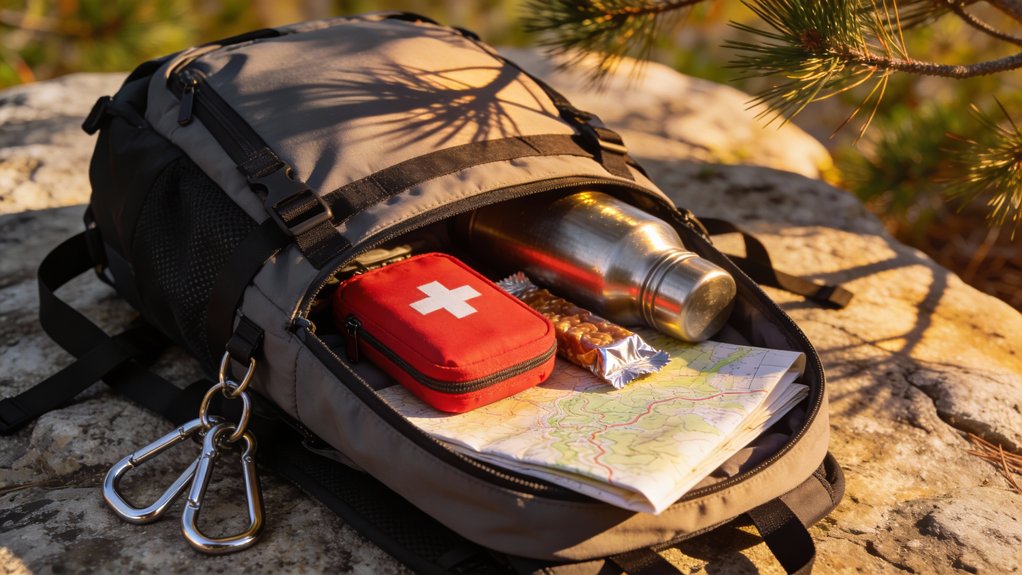
Before you hit the trail, you’ll need a daypack that can handle your gear without weighing you down.
The Osprey Hikelite 18 or Gregory Nano 18 H2O are solid choices, both under 2 pounds with rain covers included.
At just under 2 pounds each, these daypacks won’t slow you down and come ready for wet weather.
Key pack features include external mesh pockets for quick snacks and adjustable straps that let you dial in the perfect fit.
For hydration options, look for a built-in reservoir spot, it’s easier than constantly stopping for your water bottle.
Try on several packs with weight inside to test how they distribute the load across your back and shoulders.
Starting with basic preparation tips before your hike ensures you’ll feel confident and ready to tackle the trail.
Bring 2 Liters of Water Plus a Backup Filter
Once you’ve got your pack sorted, it’s time to fill it with the right amount of water. Bring at least 2 liters for proper hydration on any day hike.
Smart hydration strategies include using a reservoir with a drinking tube so you’ll sip throughout the trek without stopping.
Pack a Sawyer Squeeze filter with a 2L CNOC Vecto Bag as backup: you can refill from streams when you’re miles from the trailhead.
Toss water purification tablets in your first aid kit too.
Building your endurance through gradually increasing hike distances will help you manage hydration needs more effectively as you progress from shorter day hikes to longer adventures.
This water filtration approach keeps you independent, energized, and ready for whatever the trail brings.
Pack Calorie-Dense Snacks to Eat Every Hour
Your body burns through 300-500 calories per hour on the trail, so you’ll need snacks that deliver serious energy without weighing you down.
Fuel smart on the trail: 300-500 calories burned per hour demands lightweight, energy-packed snacks that won’t slow you down.
Pack granola bars, nut butter packets, and trail mix: they’re calorie-dense and won’t crush in your pack.
Eat something every 1-2 hours to keep your energy management consistent. Snack variety matters more than you’d think; switching between sweet and savory options makes you more likely to actually eat.
Throw in energy chews or oat bars for quick fuel.
Always pack extra snacks for unexpected delays. Running out of food kills your momentum faster than anything.
Wear Breathable Base Layers and Supportive Trail Shoes
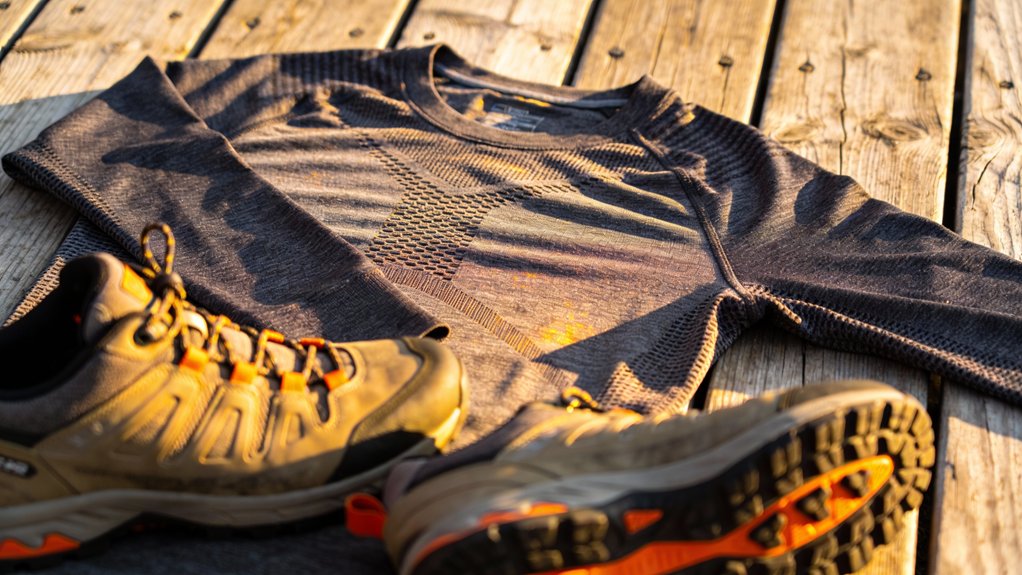
What you wear matters more than most beginners realize. Start with moisture-wicking base layers in synthetic materials or merino wool: they pull sweat away from your skin instead of trapping it.
Choose breathable fabrics like long-sleeve sun hoodies and lightweight hiking pants that ventilate while protecting you from the sun.
For trail footwear, go with supportive trail runners or lightweight hiking boots that grip rocky terrain.
Make sure your shoes fit with toe room to prevent blisters, and pair them with moisture-wicking socks.
Layer up with an extra fleece or rain jacket to adapt as conditions change throughout your hike.
Add an Insulating Layer for Temperature Swings
Add an Insulating Layer for Temperature Swings
Base layers handle moisture, but they won’t keep you warm when temperatures drop 20 degrees between your trailhead start and that exposed ridge.
You’ll need something designed for temperature regulation.
Pack a lightweight insulating layer: fleece or synthetic puffy works best.
- Merino wool or synthetic insulating materials provide warmth while still wicking moisture
- Lightweight and packable designs won’t burden your daypack
- Easy on/easy off layering adapts to changing conditions
- Essential at higher elevations where temps swing dramatically
- Bring it even on warm days, late afternoon weather changes fast
Stuff it in your pack.
You’ll appreciate having options when conditions shift.
Throw in a Rain Jacket Even if Skies Look Clear
Even when the forecast shows nothing but sunshine, a rain jacket belongs in your pack. Mountain weather can flip in thirty minutes, turning your clear-sky adventure into a soaking mess.
Rain jacket benefits extend beyond keeping you dry: they block wind that strips away body heat fast. Choose a lightweight, packable option made from breathable fabric so you won’t overheat during climbs.
Look for adjustable cuffs and a hood for proper coverage. Weather preparedness means carrying this essential layer every time you hit the trail.
It’s your insurance policy against hypothermia and miserable hikes home.
Don’t Skip Sunscreen, a Hat, and UV-Blocking Sleeves
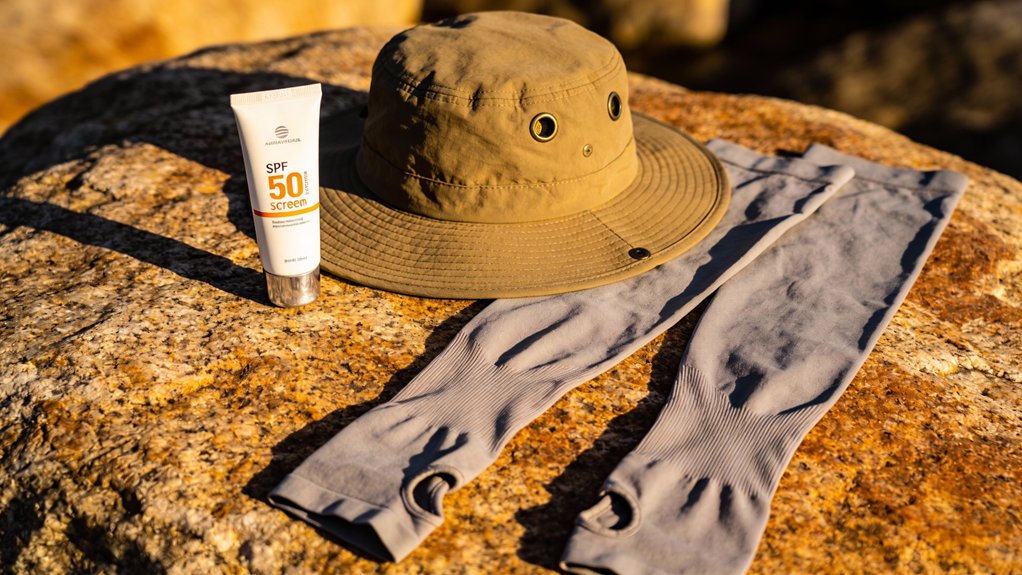
Rain protection handles one weather extreme, but sun exposure hits you on those clear days.
Sunscreen benefits your skin by blocking harmful UV rays that cause burns and long-term damage. You’ll want broad-spectrum SPF 30 minimum, reapplied every two hours.
Essential UV protection includes:
- Broad-spectrum sunscreen (SPF 30+) for exposed skin
- Wide-brimmed hat to shade your face and neck
- UV-blocking sleeves for arm coverage on extended hikes
- UPF-rated clothing that’s lightweight and breathable
- Reapplication every two hours during outdoor activity
This combination keeps you comfortable while preventing sunburn.
Don’t let sun damage restrict your future adventures.
Pack a Headlamp in Case You’re Out After Dark
Pack a Headlamp in Case You’re Out After Dark
While most day hikes finish before sunset, unexpected situations change your timeline fast. A wrong turn, injured companion, or slower pace can push you into darkness.
That’s when a headlamp becomes essential: it keeps your hands free for trekking poles or scrambling over rocks.
A headlamp keeps both hands available for navigation and safety while hiking in low-light conditions.
Choose headlamp features like adjustable brightness to conserve power and red light mode to preserve your night vision.
Battery options matter too. Pack spare AAAs or bring a rechargeable model with a full charge.
A compact, lightweight headlamp weighs almost nothing in your pack but provides everything you need when daylight disappears.
Download Your Trail Map and Tell Someone Your Route
Safety extends beyond what you carry in your pack.
Trail map downloads and safety communication give you freedom to explore while others know you’re accountable.
Here’s how to prep:
- Download your trail map using the onX Backcountry app before you lose cell service, grab elevation profiles and current conditions
- Text someone your route and expected return time
- Print a paper backup map in case your phone dies
- Enable GPS tracking on your Garmin inReach Mini 2 so loved ones can follow along
- Check weather forecasts the day before your hike
These steps take ten minutes but make all the difference.
Carry a Basic First Aid Kit and Portable Charger
A blister at mile three or a dead phone at the trailhead can derail your entire day hike. Pack a basic kit with first aid essentials: adhesive bandages, antiseptic wipes, gauze pads, and pain relievers for minor injuries.
Small mishaps shouldn’t end your adventure—basic first aid supplies and a charged phone are your safety net on the trail.
Choose a portable charger with at least 10,000 mAh capacity, enough to recharge your smartphone multiple times. This keeps navigation apps and emergency communication devices like the Garmin inReach Mini 2 running.
Check your kit regularly, replacing expired items and adjusting quantities for your group size. Keep both easily accessible in your backpack.
You’ll hike with confidence knowing you’re prepared for common trail situations.