Fact box
- Length / visit type: half-day minimum; full day if you combine beach, Fort Miles, trails, and the nature center
- Surface mix: paved roads and bike loop, crushed stone and boardwalk on trails, sandy ocean beach
- Difficulty: easy to moderate (bike loop has two steep sections; trails are flat)
- Parking and entrance fee: required for all interior lots; current rates are on the Delaware State Parks page for Cape Henlopen
- Restrooms / facilities: modern bathhouse with showers and changing rooms at the northern beach; restrooms and facilities at the Seaside Nature Center; pier concession open seasonally
- Dogs: allowed on trails on a leash no longer than six feet, per Delaware State Parks policy; banned from swimming and sunbathing beaches May 1 through September 30 by Delaware State Law
- Official source: Delaware State Parks, Cape Henlopen
- Last verified: 2026-06
What Cape Henlopen is, in one paragraph
Cape Henlopen State Park covers 5,450 acres near Lewes, where Delaware Bay meets the Atlantic Ocean. William Penn declared the cape public in 1682 “for the usage of the citizens of Lewes and Sussex County,” making it one of the first public-use parcels in the Thirteen Colonies, per Wikipedia. The park was formally established as a Delaware state park in 1964. It serves as the eastern terminus of the American Discovery Trail, the only transcontinental trail in the United States at roughly 6,800 miles coast-to-coast, per discoverytrail.org. That marker sits on a WWII-era bunker on the beach.
The practical details (fees, parking, dogs, restrooms) come first, not last.
Fort Miles and the fire control towers
Fort Miles was established during World War II and defined what Cape Henlopen looks like today. Numerous bunkers, concrete observation towers, and a pier built for mine-laying operations all remain on the grounds, per Wikipedia.
The Fort Miles Historic Area has been on the National Register of Historic Places since 2004. It includes a museum in a refurbished gun battery, an orientation building, several barracks, and surviving fire control towers, per en.m.wikipedia.org/wiki/Fort_Miles. Tower 7 has visitor access, per the same source. The towers are visible from the beach and from the park’s 3.8-mile paved bike loop, which passes directly through the historic area, per TrailLink.
One observation tower near Fort Miles has a spiral staircase with panoramic views of the Cape Region, per TrailLink. You don’t need a separate ticket to walk the grounds; the park entrance fee covers access to the historic area.
Every fact here links to its official source.
The Great Dune, the beaches, and the Seaside Nature Center
At the north end of the park near Herring Point, the Great Dune rises 80 feet above sea level. It’s one of the defining landmarks of the Cape Henlopen shoreline. The original Cape Henlopen Lighthouse, constructed between 1767 and 1769, once stood near it; the lighthouse fell into the ocean on April 13, 1926, per Wikipedia.
The park has two swimming beaches with lifeguard patrols running from Memorial Day through Labor Day weekends, per Wikipedia. Both beaches remain open year-round, but unguarded outside that window. A modern bathhouse with showers, changing rooms, and a snack bar sits at the northern beach.
The Seaside Nature Center features marine aquariums and natural history exhibits about the park’s coastal ecosystems. Environmental education programs run year-round, and the center includes an auditorium and a gift shop, per Wikipedia. Programs include guided nature walks, birding trips, hayrides, and children’s workshops.
The center also serves as the recommended starting point for the park’s bike loop; parking and restrooms are available there, per TrailLink. Check current hours on the official park page before you go, as hours vary by season.
Trails, the fishing pier, and Gordons Pond
Cape Henlopen has more trail mileage than most visitors realize.
The Gordons Pond Trail is the park’s most distinctive hike: a 3.2-mile point-to-point on crushed stone and elevated boardwalk per TrailLink, skirting a 900-acre saltwater lagoon that Delaware Greenways calls one of only four North American waterfowl migration superhighways. The full trail guide covers distances, access, and seasonal notes in detail.
The 3.8-mile paved Cape Henlopen Bike Loop connects the Seaside Nature Center, Fort Miles, the northern beach bathhouse, and the Dune Road junction, per TrailLink. Two steep sections break the otherwise flat circuit: one on approach to Fort Miles and one just west of the campground. Free bike loans are available in the park, weather permitting, per Wikipedia. The Walking Dunes Trail adds a 2.6-mile crushed-stone connector between the Gordons Pond Trail and the bike loop near the Great Dune, per TrailLink.
The western edge of the park is part of the Junction and Breakwater Trail, a 5.8- to 8.3-mile National Recreation Trail on a former rail line, per Delaware Greenways. For the full picture of county trails that reach this park and connect to Lewes, see the Sussex County hiking guide.
The fishing pier on Delaware Bay is open 24 hours a year-round, per Wikipedia. The Cape Henlopen Fishing Center, the concessionaire bait-and-tackle shop at the pier, is open seven days a week from May 15 through October 1. The pier is a separate draw from the beach: no lifeguards needed, no seasonal dog restriction, and accessible any hour.
The park also has an 18-hole disc golf course open year-round, per Wikipedia.
Camping, fees, hours, and dogs
The campground has over 150 sites. Family camping runs March 1 through November 30, and reservations are required, per Wikipedia. A primitive campground is also available for youth groups.
The variety of site types means this park works for everything from a tent weekend to a family RV trip.
The park is open sunrise to sunset, except the fishing pier, which is 24-hour year-round, per Wikipedia.
Entrance fees apply at all interior parking lots. The specific dollar amounts change; the current rates are always on the Delaware State Parks page.
Dogs on trails require a leash no longer than six feet. The beach restriction is firm: Delaware State Law prohibits dogs on swimming and sunbathing beaches from May 1 through September 30, per Delaware State Parks’ pets page. Outside that window, access to the beach is via pedestrian dune crossings at designated parking areas.
Rules differ park by park; the rules here apply to Cape Henlopen specifically, not to county trails or other parks you may have visited before.
Beach wheelchairs are available at this park; contact the park directly for details via the Delaware State Parks page for Cape Henlopen.
When to come
The shoulder seasons are when this county is at its best, and Cape Henlopen is the clearest example.
In spring, horseshoe crabs spawn on the bayside beaches, providing a food source for thousands of migrating birds that stop on the Cape during their northward run, per TrailLink. The park is site 16 on the Delaware Birding Trail, a list of the 27 best birding sites in the state, per delawarebirdingtrail.com. Delaware has been called the Shorebird Capital of the world for its bay-shoreline concentrations, per the same source.
Fall brings migration again, with fewer crowds and cooler beach temperatures. Three endangered species are regularly present in the park: the black skimmer, the least tern, and the piping plover, per Wikipedia.
Nesting activity in late spring and early summer means some beach sections may be roped off to protect nesting sites; check conditions before you go.
Summer is the busiest window. Parking lots at peak summer weekends can fill early. If you’re visiting in July or August, arriving before 9 a.m. is the practical answer to both crowds and parking.
The county has several other prime birding sites worth combining with a Cape Henlopen trip; the birding in Sussex County guide covers all of them.
Frequently asked questions
Is Cape Henlopen good for a first visit to Sussex County?
It’s the logical starting point. The park concentrates more of what the county offers in one place than anywhere else. In a single visit you can reach a guarded ocean beach, WWII history, one of the county’s best birding trails, a nature center with marine exhibits, a bay fishing pier, camping, and the eastern end of a 6,800-mile cross-country trail. For a first-time visitor trying to understand what Sussex County looks like, Cape Henlopen is the clearest single answer.
For a broader comparison of the county’s state parks, see the Sussex County state parks guide.
How much does it cost to get into Cape Henlopen State Park?
An entrance fee applies to all interior parking lots. The rates change, so the Delaware State Parks page is the right place to check current figures before your visit. No specific dollar amounts are published here because they’re updated by the park.
Can you bring a dog to Cape Henlopen beach?
Dogs are welcome on the park’s trails year-round on a six-foot leash, per Delaware State Parks policy. The beaches are a different matter. Delaware State Law prohibits dogs on swimming and sunbathing beaches May 1 through September 30. Outside that window, beach access is via pedestrian dune crossings at designated parking areas.
What is there to do at Cape Henlopen besides the beach?
Fort Miles Historic Area and its museum, the 80-foot Great Dune, the Seaside Nature Center with marine aquariums, the 24-hour bay fishing pier, a 3.8-mile paved bike loop (with free bike loans available), the Gordons Pond Trail for birding, an 18-hole disc golf course, and over 150 campsites. Spring adds horseshoe crab spawning; fall adds peak bird migration. The park is large enough that a repeat visit looks quite different depending on what you prioritize.
Can you see the WWII towers and Fort Miles without paying extra?
Yes. The park entrance fee covers access to the Fort Miles Historic Area, the gun battery museum, and the grounds with the fire control towers. No additional admission applies.
The observation tower with the spiral staircase and panoramic views is on the bike loop route, accessible from inside the park.
For context on all of Sussex County’s state parks, see the Sussex County state parks guide.
Deciding between the coastal parks? The bay-park comparison weighs Delaware Seashore, Fenwick Island, and Holts Landing side by side.
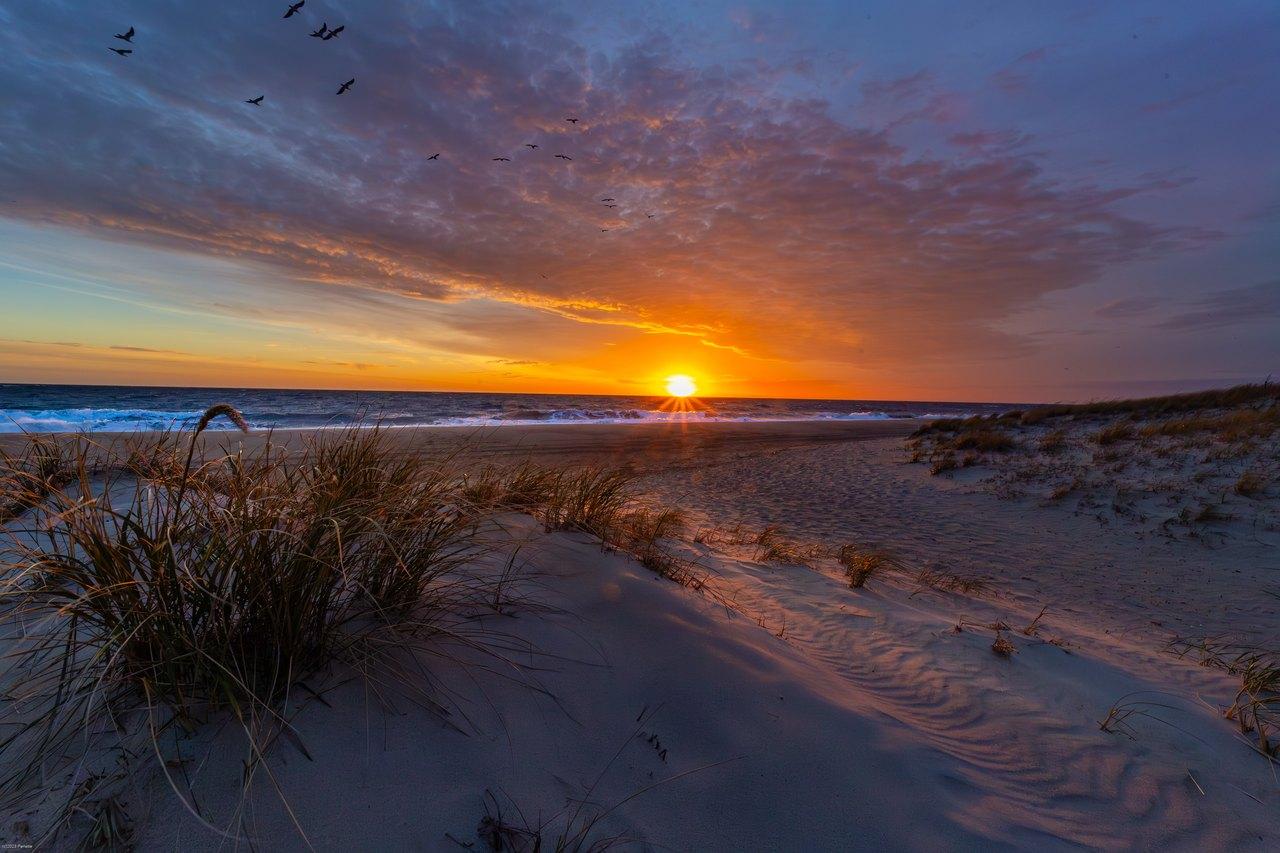
Photo by Andrew Parlette (CC BY 2.0), via Wikimedia Commons.
.jpg)
Last verified: 2026-06.