Fact box
- Length / route type: loop, 4.5 miles (TrailLink) / 4.6 miles (Delaware Greenways)
- Surface: packed earth, boardwalk over wetlands, crushed stone, with a short paved section near the dam
- Difficulty: easy; flat terrain throughout, per TrailLink
- Parking: Baldcypress Nature Center (closed Mondays and Tuesdays) and the Trap Pond Camp Store, both at the price of the state park entrance fee; current rates on the Delaware State Parks site
- Restrooms / facilities: at the Baldcypress Nature Center; the nature center also runs pontoon boat tours, guided hikes, and naturalist programs
- Dogs: permitted (check current park rules for leash requirements)
- Bikes: permitted on the full loop; equestrian use restricted to the southwestern portion
- Official source: Delaware Greenways, Bob Trail
- Last verified: 2026-06
The Bob Trail is the signature hike at Trap Pond State Park. It loops around a 90-acre freshwater pond through packed earth, boardwalk, and crushed stone. It’s the only trail in this county that takes you through a true cypress swamp.
This guide covers the route, practical access, and natural history details, drawn from TrailLink, Delaware Greenways, and the National Park Service.
The route: what you’ll see
The Bob Trail runs a full perimeter loop around Trap Pond. According to TrailLink, it travels “over boardwalk bridges through Trap Pond’s freshwater swamps, offering intimate views into the lowlands of Sussex County.”
The south side of the loop is wider, around 8 feet, while the north side narrows to about 4 feet. Both sides are firm underfoot, with fine gravel or dirt in the wooded stretches.
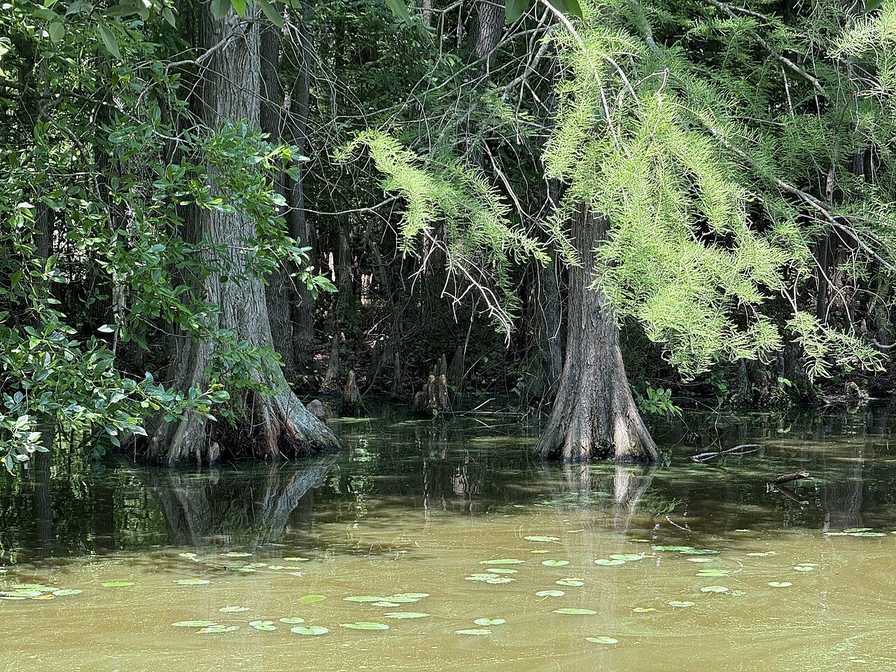
Cypress Point is the standout section, where bald cypress trees grow straight out of the water. According to the National Park Service, Trap Pond holds the nation’s northernmost natural occurrence of bald cypress. The species otherwise ranges south to Florida and west into Texas.
Cypress Point, per TrailLink, offers views of “extensive stands of bald cypress trees, the northernmost in the eastern United States.”
From Cypress Point, the loop continues into the forest and through the campground before tracking the western edge of the pond. It passes a larger dam, then turns back toward the picnic area and the Baldcypress Nature Center where it started, per TrailLink.
The trail also crosses a scenic dam at Raccoon Pond, a distinct landmark on the southeastern side of the loop. A wooden bridge on the return leg toward the camp store is another commonly noted birding stop.
At the park’s southeastern end, the trail passes Bethesda Church’s historic cemetery along Wootten Road. The century-old headstones are noted by TrailLink as worth a stop.
Parking, fees, and access
Two parking areas serve the Bob Trail. The Baldcypress Nature Center at 33587 Baldcypress Lane, Laurel, is the main trailhead and sits closest to Cypress Point. It’s closed Mondays and Tuesdays, per TrailLink.
The second option is the Trap Pond Camp Store at 15702 Jason Bch Rd, Laurel, as TrailLink lists it.
Both require the state park entrance fee to park. Neither TrailLink nor Delaware Greenways publishes a dollar amount; both point to the park’s official site for current fee information.
Restrooms are at the Baldcypress Nature Center when it’s open. If you’re visiting Monday or Tuesday, plan around the camp store access point instead.
The trail is listed as wheelchair accessible by TrailLink, and permitted activities include biking, fishing, walking, and restricted equestrian use. Trail-use markers guide users through the southwestern portion, where equestrians are confined.
The American Holly Trail is a 0.7-mile crushed-stone spur connecting the Baldcypress Nature Center to the Bob Trail. It passes through loblolly pine, baldcypress, and American holly, Delaware’s state tree. It’s the shorter option if you want the cypress scenery without the full 4.5 miles.
The pond, the dam, and the trees
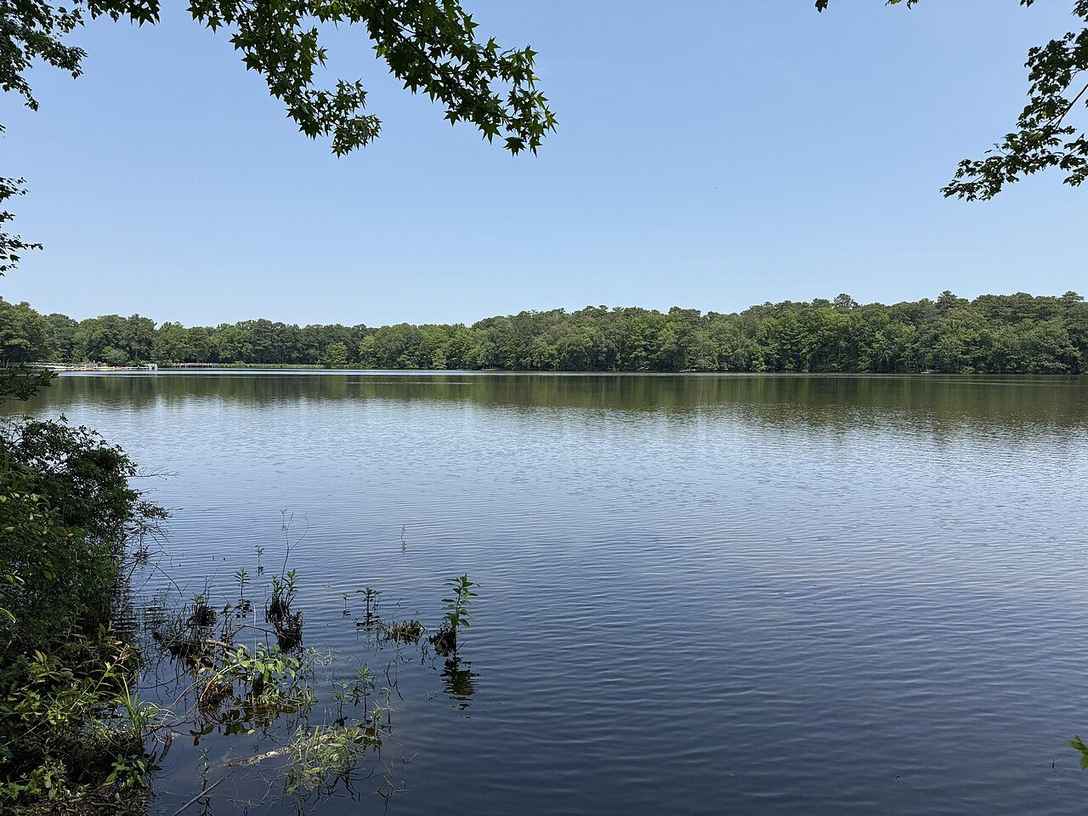
Trap Pond is 90 acres and mostly 8 feet deep or less. The NPS article notes the pond was created by damming a creek more than two centuries ago. The dam’s hydropower was first used to saw timber.
Most of the original cypress was logged out. What stands at Cypress Point today is the regrowth.
The park takes its name from the Trap Mills, which operated here by the 1860s, per Wikipedia. It covers nearly 4,000 acres and was Delaware’s first state park, established June 22, 1951.
Large specimens of American holly, the state tree of Delaware, also grow in the Trap Pond bottomland alongside the cypress, per Wikipedia. The Baldcypress Nature Center displays reptiles, fish, and amphibians from the pond. It also has a nature library and naturalist-led pontoon boat tours.
The trail carries a naming story. It was formerly the Loblolly Trail. It was renamed in honor of Bob Venables, a local champion for trails and the outdoors, per TrailLink.
Birds: what to watch for
The cypress marsh draws a reliable mix of species year-round. Pileated woodpeckers are spotted in the freshwater cypress marshes, per TrailLink and Wikipedia.
Warblers, kingfishers, geese, and herons are among the species Delaware Greenways lists for the Bob Trail. The NPS article mentions kingfisher and wood duck calls in the water-woods. Great blue herons, owls, hummingbirds, and bald eagles are also recorded in season, per Wikipedia.
The wooden bridge on the return leg, near the camp store, gets specific mention from a TrailLink reviewer as a good birding spot.
Seasonal notes
Trap Pond’s loop has no seasonal closure. The cypress trees are most striking in late spring when new growth fills in. In autumn, the needles turn rust-orange before dropping.
Bald cypress is a deciduous conifer, so the pond looks different in winter than in summer.
Summer brings heat and humidity in the lowland sections. The boardwalk stretches can be exposed. Early morning visits clear of the midday heat, and the bird activity is stronger then too.
The park also offers paddling. Trap Pond is navigable by kayak and canoe. The water trails at the park are covered in the Sussex County kayaking and canoeing guide.
Frequently asked questions
How long is the Bob Trail at Trap Pond?
The published figures vary slightly: TrailLink lists 4.5 miles and Delaware Greenways gives 4.6 miles. Both describe a full loop around Trap Pond. Expect roughly 4.5 to 4.6 miles on the ground.
Is there an entrance fee for the Bob Trail?
Yes. Parking at both the Baldcypress Nature Center and the Trap Pond Camp Store requires the state park entrance fee. The trail databases don’t publish the dollar amount; check the current rates on the Delaware State Parks site.
What surface is the Bob Trail?
It’s a mix. The trail runs on packed earth and fine gravel through the forest sections. Boardwalk bridges cross the freshwater swamp, and a short paved section runs near the dam.
The south side is wider (around 8 feet) than the north side (around 4 feet), per a TrailLink reviewer.
Where are the bald cypress trees on the Bob Trail?
The main cypress stand is at Cypress Point, on the loop’s eastern side accessible from the Baldcypress Nature Center trailhead. For a shorter approach to the same area, the American Holly Trail is a 0.7-mile spur from the nature center to the Bob Trail.
Can you do the Bob Trail on a weekday?
Yes, but note that the Baldcypress Nature Center is closed Mondays and Tuesdays, per TrailLink. The trail is accessible from both the nature center lot and the camp store. If you’re visiting on a Monday or Tuesday, use the camp store lot as your starting point.
For all 19 public trails in the county, from the coast to the inland forest, see the Sussex County hiking guide.
Photos: Famartin, south shore and open water (CC BY-SA 4.0), via Wikimedia Commons.


Last verified: 2026-06.