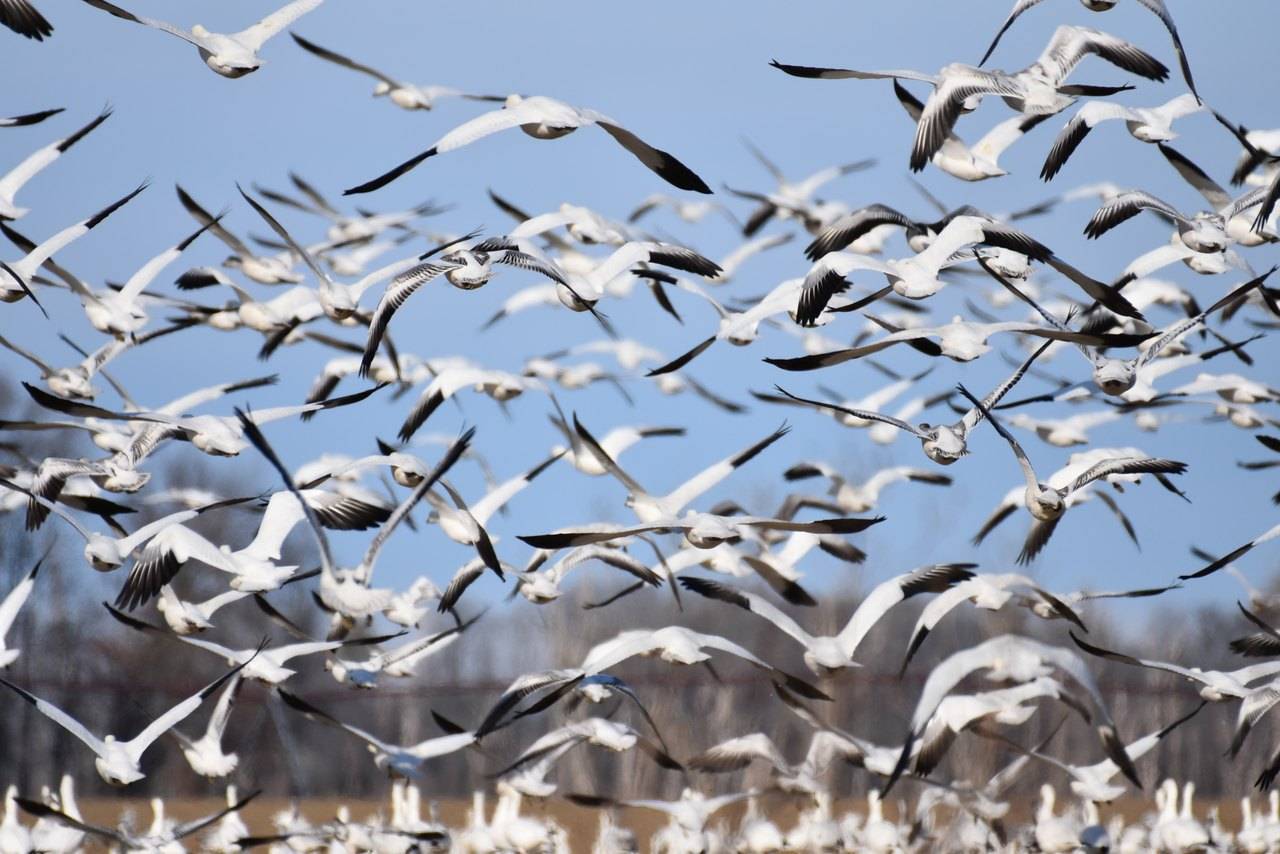
Prime Hook National Wildlife Refuge draws snow geese starting in October, and the birds stay through the heart of winter. The window runs roughly November through February, with numbers that can drop during hard freezes and climb again in late February as birds push back north. Full details on the refuge are at the Prime Hook wildlife refuge guide.
Miss it and you’ll wait another year. The spectacle is one of the more reliable pieces of wildlife watching in Sussex County, and every fact here links to its official source.
Best season: November through February (peak waterfowl)
Access: Three roads cross the refuge; no entrance fee
Parking: Free pull-offs along Broadkill Beach Road, Prime Hook Beach Road, and Fowler Beach Road
Fee: Free, per USFWS
Hours: Half hour before sunrise to half hour after sunset, per USFWS
Dogs: Allowed on refuge trails and roads on a short handheld leash. Fowler Beach does not allow dogs at any time, per USFWS
Official source: fws.gov/refuge/prime-hook
Last verified: 2026-06
The viewing window
According to the Delaware Birding Trail, concentrations of geese and freshwater ducks begin building from October and continue through the end of the year. Numbers may drop somewhat in mid-winter during heavy ice cover, then rise again in February and early March as birds return from farther south.
By February, a different kind of activity begins alongside the viewing. Delaware’s Snow Goose Conservation Order runs from early February through mid-April, a special season DNREC operates to manage a population large enough to damage Arctic nesting grounds and wetland habitat along migration routes.
Prime Hook has designated blind sites for hunters during this window, per DNREC’s migratory bird page. Check dates before you go.
The practical viewing peak is late fall into winter: November, December, and January. That’s the window when hunting pressure is lowest and concentrations are at their deepest.
Where to see them inside the refuge
Prime Hook covers more than 10,000 acres, roughly 80 percent wetlands, according to USFWS. Three roads give access to different parts of the refuge, and each one offers something different.
The Broadkill Impoundment is the place to go for snow geese. The Delaware Birding Trail’s refuge guide calls it the favorite spot for watching snow geese and for scanning the flocks for rarer species like Ross’s Goose and Cackling Goose.
The impoundment runs for nearly a mile along the south side of Broadkill Beach Road, just before the town of Broadkill Beach. Pull off, scan the water, and work through the birds methodically.
The headquarters area, reached via Turkle Pond Road off Broadkill Beach Road (Route 16), has two short walking trails. The Boardwalk Trail is a half-mile loop; the Dike Trail is half a mile each way, so a mile round trip. Both take about an hour, per the Delaware Birding Trail. Both move through freshwater marsh and forest edge, habitats that hold songbirds and raptors alongside waterfowl.
Prime Hook Beach Road and Fowler Beach Road both offer roadside birding from gravel pull-offs, per the Delaware Birding Trail. The wetlands along Prime Hook Beach Road lean fresher; Fowler Beach Road runs through more saline habitat. At the bay end of Fowler Beach Road, a viewing platform on the north side of the road gives open sightlines across both the marsh and the shoreline.
The refuge sits 5 miles northeast of Milton, per the Delaware Birding Trail. It’s been listed as site 14 on the Delaware Birding Trail and is described there as easily ranking among the mid-Atlantic region’s finest birding spots.
Best time of day and conditions
Snow geese are most active at the edges of daylight. Morning and evening are when you’ll see flocks moving, lifting off the impoundments before dawn or settling in as the light goes flat. Midday hours can look quiet even when the numbers are there.
Cold, clear weather after a cold front tends to push birds south and concentrate them on open water. Avoid visiting right after a hard freeze if the impoundments are iced over; the birds shift and numbers drop until temperatures lift, according to the Delaware Birding Trail.
The refuge is open from a half hour before sunrise to a half hour after sunset, per USFWS. That window matches the best viewing hours closely.
Bring layers. Winter mornings along the Delaware Bay shore are cold and often windy, with little shelter on the dike and impoundment edges.
What else is on the water
Snow geese rarely travel alone. Large flocks on the Broadkill Impoundment typically share the water with Canada geese, tundra swans, and a mix of freshwater ducks, all documented winter visitors at the refuge. The same Delaware Birding Trail guide that flags the impoundment for snow geese notes that scanning the white flocks can turn up Ross’s Goose and Cackling Goose.
The refuge supports over 245 species of birds, per USFWS (Wikipedia’s refuge article puts the count at 267). Winter is one of the most productive seasons at the refuge, when migrants pack the freshwater impoundments the FWS created in the 1980s by converting salt marshes with tide gates, per Wikipedia’s Prime Hook NWR article.
Raptors work the marsh edges in winter too. Short-eared owls, northern harriers, and rough-legged hawks turn up regularly in the colder months across Delaware’s marshes, though conditions and sightings vary year to year.
For a full picture of what’s on offer seasonally across Sussex County, see the county’s birding guide.
Visiting in winter
No entrance fee applies at Prime Hook. The refuge is free year-round, per USFWS. That’s one of the practical details that makes winter visiting straightforward: no booth to deal with, no seasonal passes.
The practical details come first at this site, and winter at Prime Hook stacks up well. The mosquitoes that make summer visits miserable have been gone since October.
The refuge trails and roads are quiet. The viewing is about as good as Delaware gets for waterfowl.
Dogs are allowed on the refuge trails and roads on a short handheld leash. Fowler Beach does not allow dogs at any time, per USFWS. The impoundment areas are road-accessible, so you don’t need to hike to reach the best views.
Dress for exposure. The Broadkill Impoundment has no windbreaks, and temperatures near the bay feel colder than the forecast. Waterproof boots matter on the dike trails if there’s been recent rain.
For everything else about visiting Prime Hook, including the full trail list, the kayak put-in, and seasonal fishing access, the Prime Hook refuge guide has the details.
Winter is a good season across the county for outdoor activity without the summer crowds. The Sussex County winter guide covers what’s open and what’s worth a trip from November through February.
Frequently asked questions
When is the best time to see snow geese at Prime Hook?
The main window is late October through February. Concentrations build from October, hold through December and January, and rise again in late February as birds prepare to push north, per the Delaware Birding Trail. Numbers can dip during heavy ice cover.
From early February, Delaware’s Snow Goose Conservation Order runs concurrently with the viewing season; check DNREC’s current dates before visiting.
Where exactly in Prime Hook can you see the snow geese?
The Broadkill Impoundment, on the south side of Broadkill Beach Road just before Broadkill Beach, is the primary viewing location. The Delaware Birding Trail’s site guide names it the favorite spot for snow geese at the refuge and notes it’s also worth scanning for Ross’s Goose and Cackling Goose mixed in the flocks.
How many snow geese are there at Prime Hook?
A specific count for Prime Hook isn’t available from verified USFWS sources. The Delaware Birding Trail describes large concentrations of geese on the refuge’s impoundments in winter; the scale is notable but varies by conditions. The Delaware Birding Trail’s geese and ducks page describes tens of thousands of snow geese at nearby Bombay Hook’s Shearness Pool during peak migration, which gives a sense of the scale across Delaware Bay refuges.
What other birds can you see at Prime Hook in winter?
Canada geese, tundra swans, and a mix of freshwater ducks share the water with snow geese on the impoundments. Ross’s Goose and Cackling Goose appear regularly in the snow goose flocks.
Raptors including northern harriers and short-eared owls work the marsh edges in winter. The refuge records over 245 bird species, per USFWS, and winter delivers the waterfowl peak.
Is Prime Hook open and free in winter?
Yes on both counts. The refuge is free with no entrance fee, and it’s open from a half hour before sunrise to a half hour after sunset every day, per USFWS. The Broadkill Impoundment is road-accessible, so you can view without a trail walk if conditions are poor.
Photo by Laura Wolf (CC BY 2.0), via Wikimedia Commons.

Last verified: 2026-06.